On December 19th, International College(IC) held a practical class on the intangible cultural heritage of Zhangzhou Woodblock New Year Painting at Room 101, Main Building 4, Zhangzhou Campus. The event specially invited Mr. Yan Chaojun, a provincial representative inheritor of Zhangzhou Woodblock New Year Painting, to guide students in closely engaging with this ancient intangible cultural heritage craft. The activity was hosted by counselor Su De, Ma Xianghua, Deputy Secretary of the College Party Committee attended the activity.
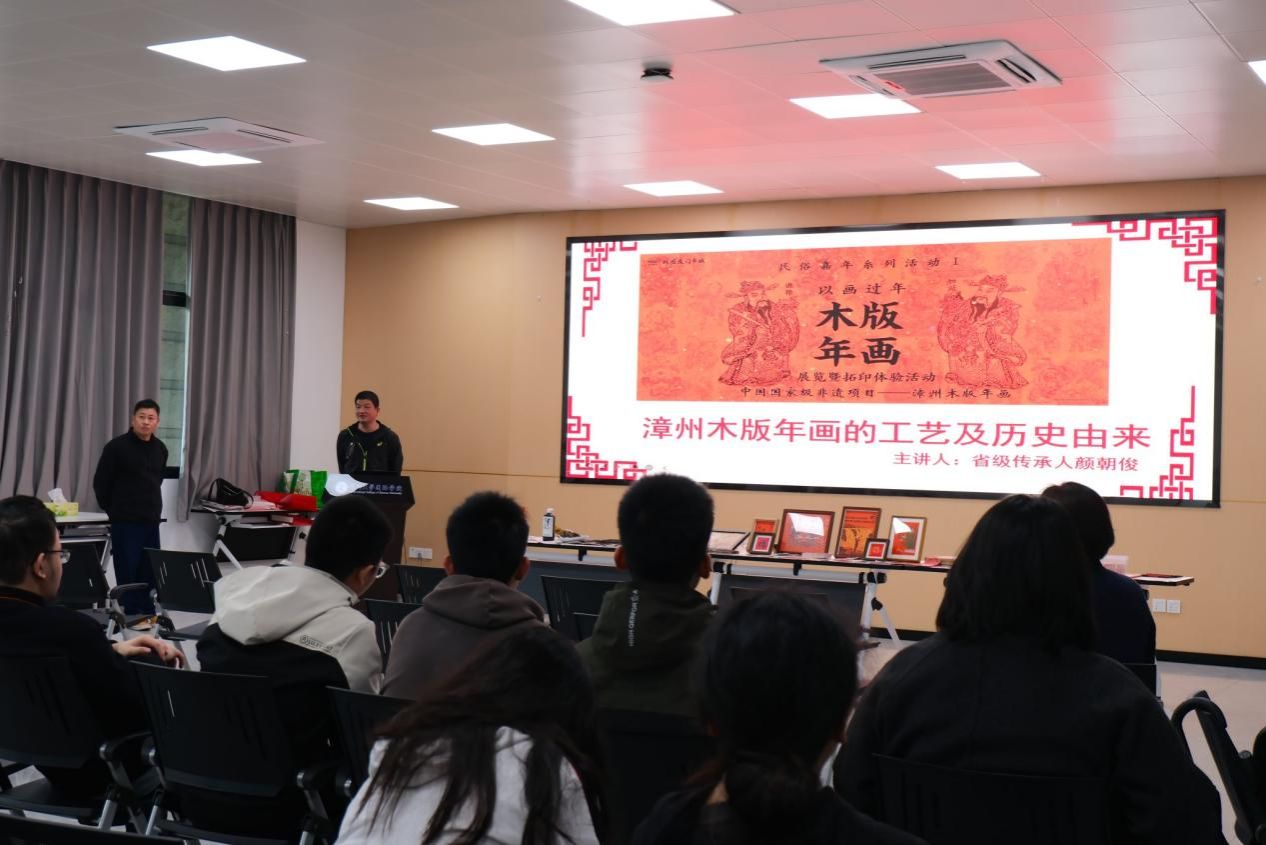
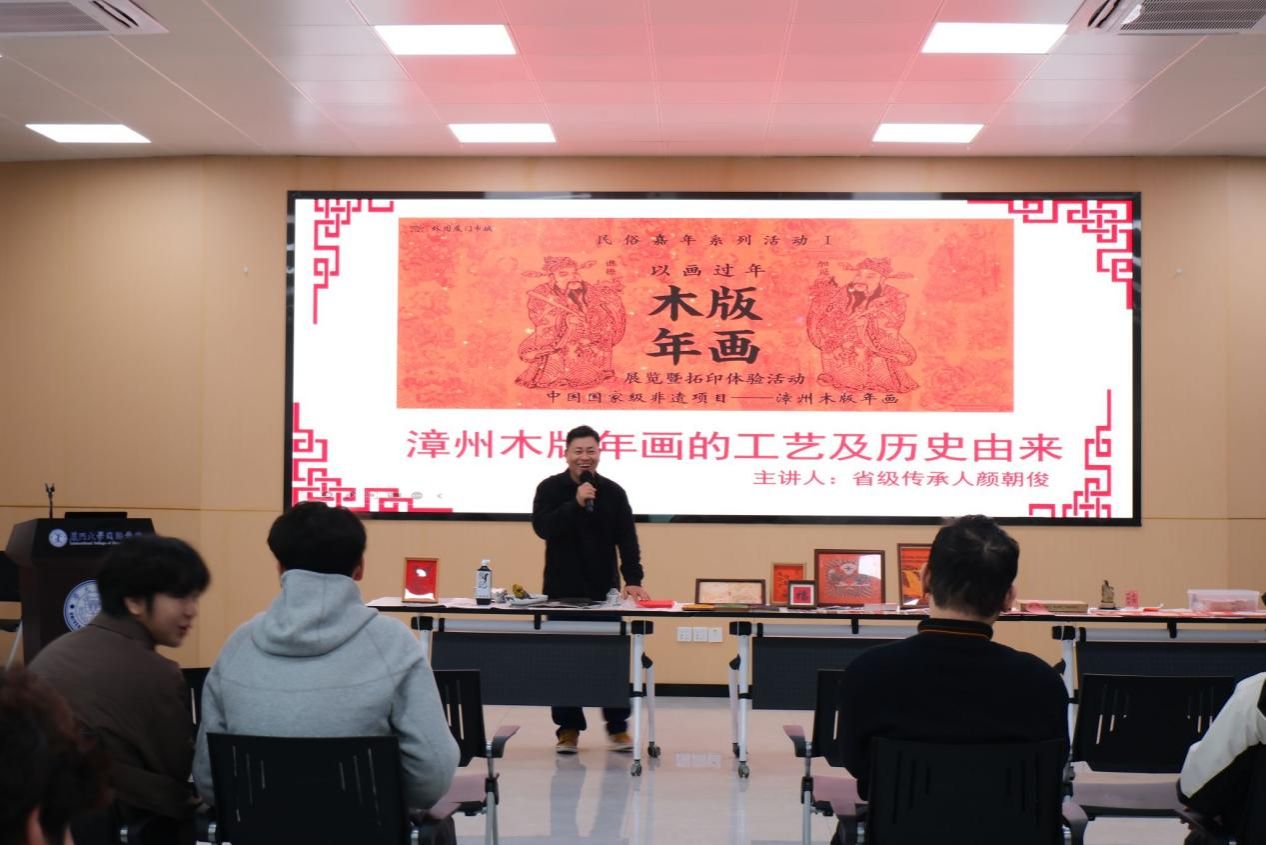
Mr. Yan began by playing a documentary on Zhangzhou Woodblock New Year Painting for the students. The rustic imagery of the New Year paintings and the vivid stories of skill inheritance instantly immersed everyone in the world of this intangible cultural heritage. Zhangzhou Woodblock New Year Painting distinguishes itself from other regional styles across China through its unique douban technique, which involves printing colors first and outlines later. It stands as one of China's ancient surviving forms of color printing, with its foundational woodblock carving and printing techniques traceable back to the Song Dynasty, reaching full maturity by the late Ming Dynasty. In 2006, Zhangzhou Woodblock New Year Painting was included in the first batch of national intangible cultural heritage items announced by the State Council, and was known as one of the four major folk woodblock New Year pictures in China along with "Tianjin Yangliuqing", "Jiangsu Taohuawu" and "Sichuan Mianzhu" woodblock New Year pictures.
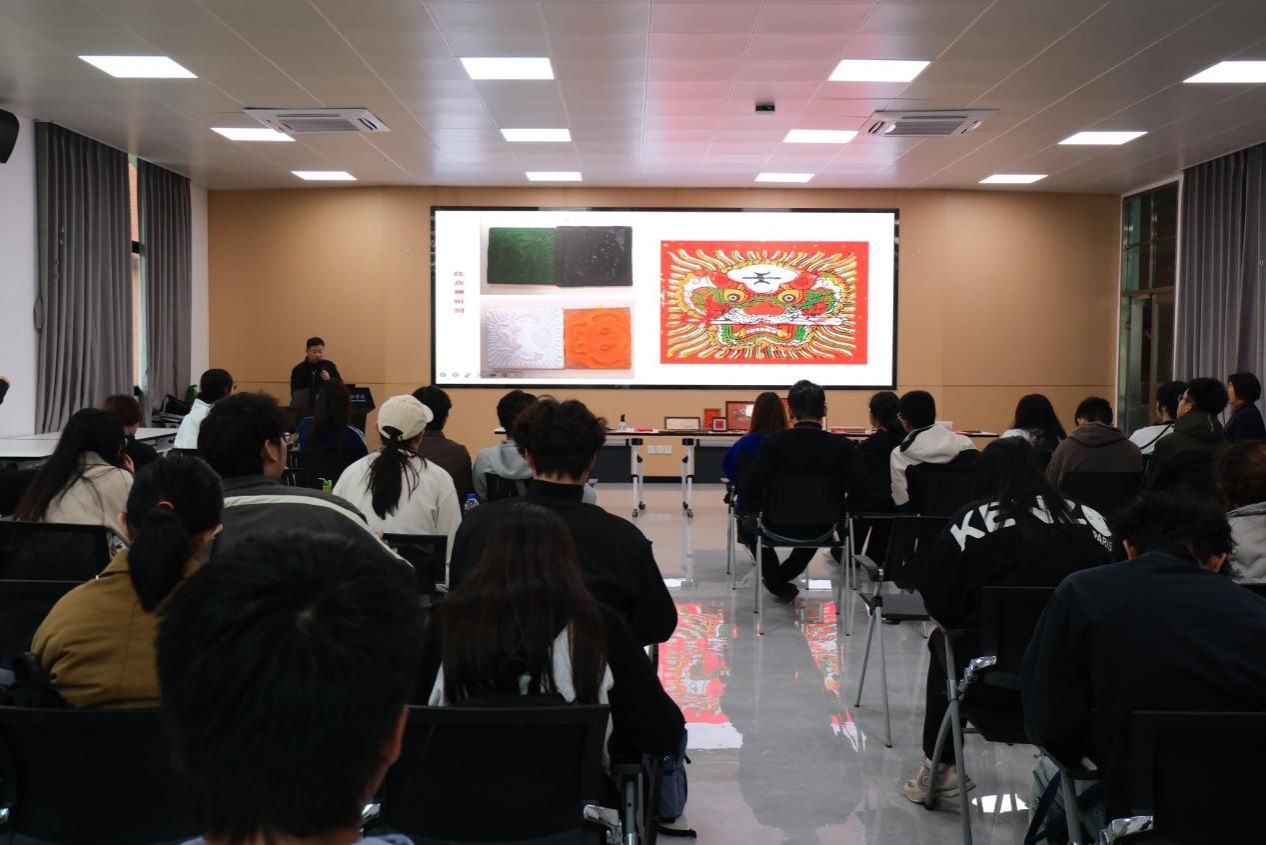

From auspicious paintings symbolizing "daily wealth accumulation and yearly family expansion" to intricate works such as Nine Professions, Dragon Boat Race, and The Wedding of the Mice; from the poetic elegance of "peach blossoms bloom, welcoming another spring" to the symbolic God of Literature, representing "the deity blessing scholarly success and claiming the top honor"... Mr. Yan showcased the rich diversity and cultural depth of Zhangzhou Woodblock New Year Painting themes with great familiarity and expertise.
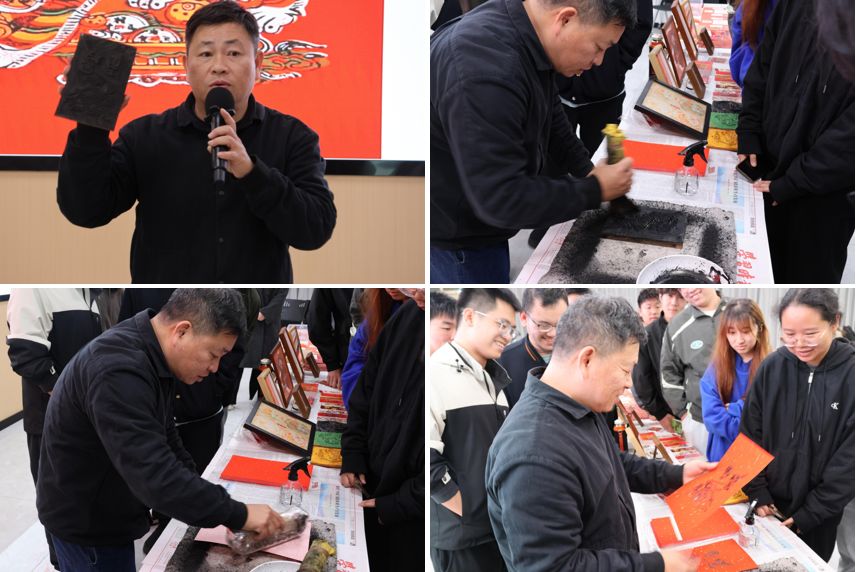
Subsequently, Mr. Yan provided the students with a detailed introduction to the craftsmanship of Zhangzhou Woodblock New Year Painting, covering aspects such as material selection for pear woodblocks and carving techniques, while also showcasing traditional tools like palm brushes. Following the theoretical explanation, Mr. Yan demonstrated the printing process of Zhangzhou Woodblock New Year Painting on-site, from moistening the block, pouring ink, brushing the block to pressing,explaining each step with clarity: moistening the block requires wetting the carved wood first, ink application must be carefully controlled, brushing should only target the raised lines, paper must be held vertically and placed without shifting once positioned, and pressing should proceed gently from text to patterns, with the paper lifted softly only after the design is clearly imprinted. Through Mr. Yan’s meticulous explanations and live demonstrations, the students gained a genuine appreciation for the craftsmanship and nuanced expertise embedded in the creation of woodblock New Year paintings.
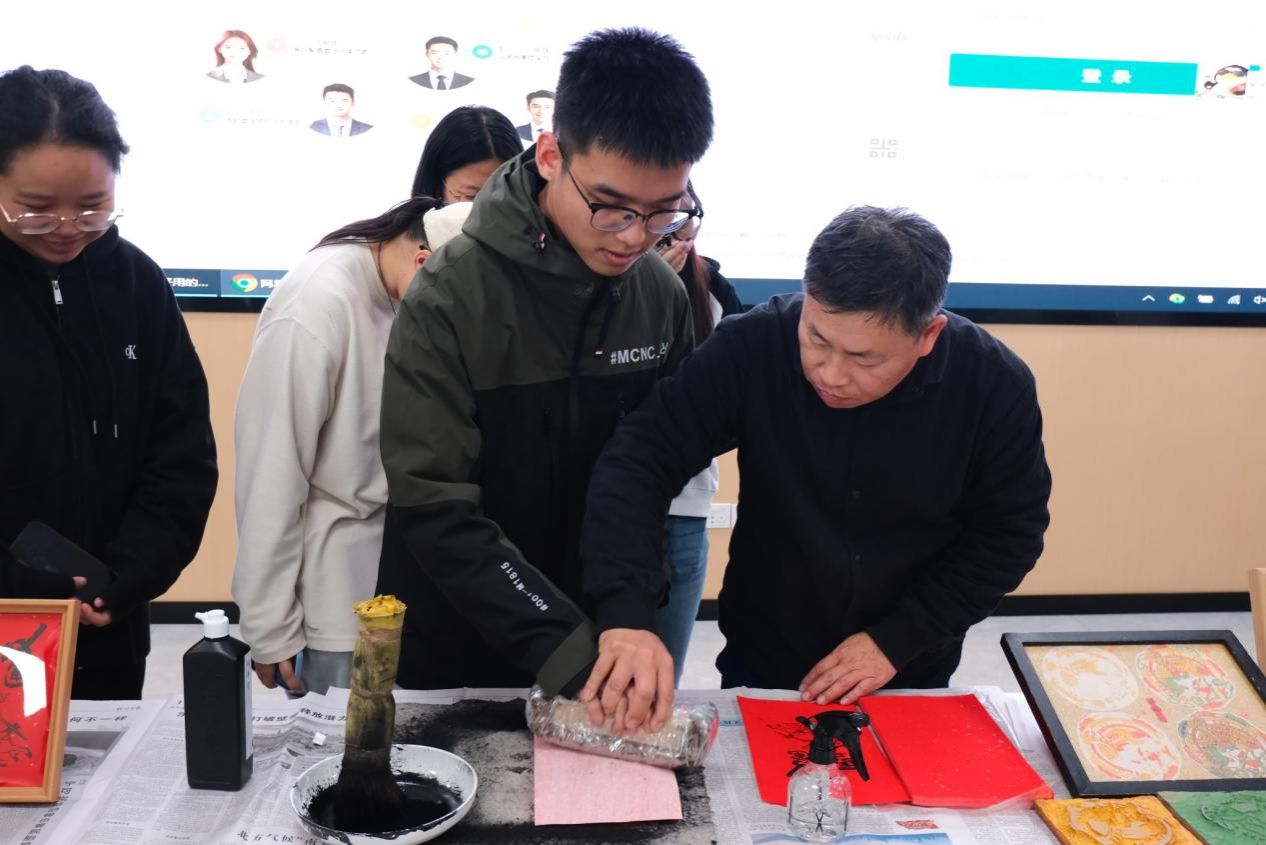
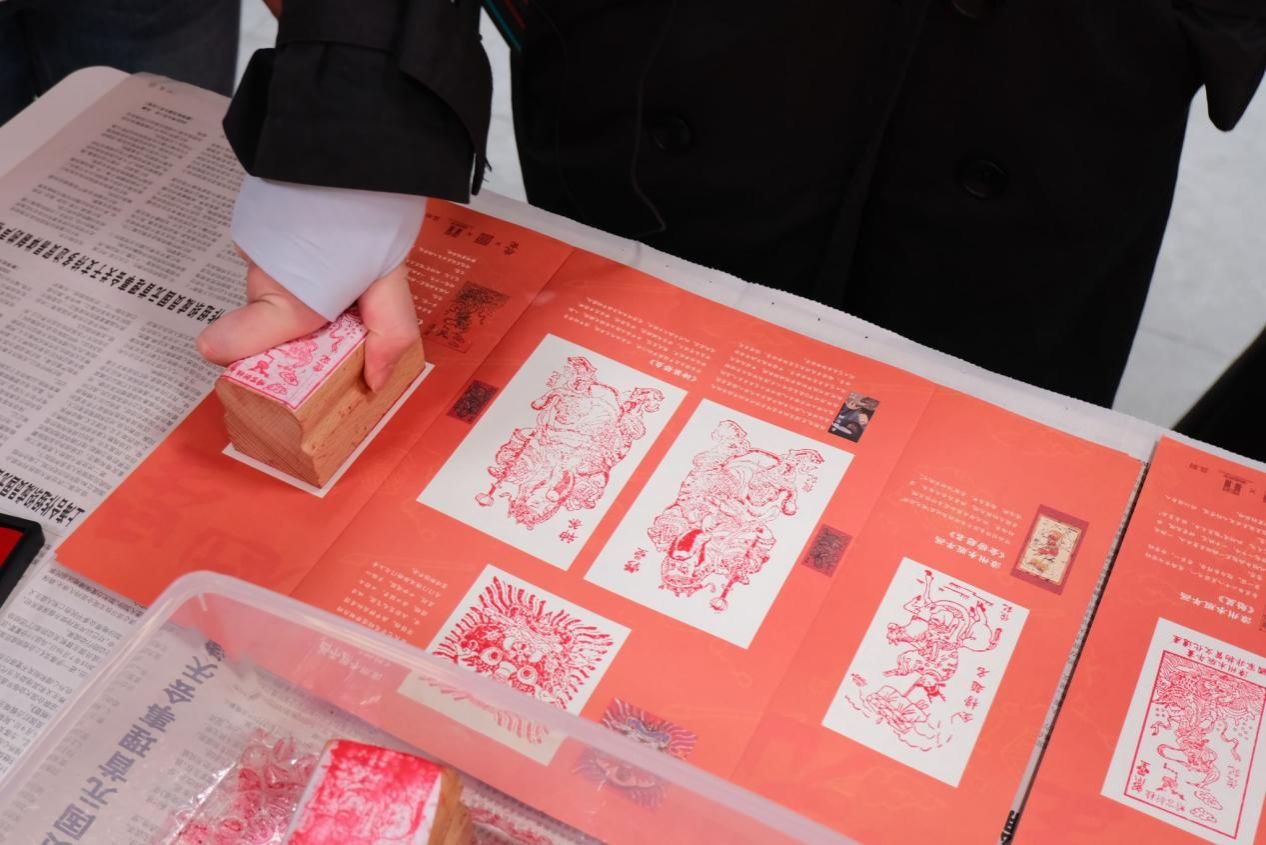
During the hands-on session, under Mr. Yan's guidance, the students personally printed a "Good Luck Soon" New Year painting themed around the Year of the Horse and also engaged in a creative stamp collecting activity. The small, exquisite stamps bearing phrases like "Heavenly Officials Bestow Blessings, All Matters Proceed Smoothly" could be imprinted on paper and embedded into phone cases as talismans for safety. The popular stamp collection booklet featured iconic designs from Zhangzhou Woodblock New Year Painting, such as the lion holding a sword, success in imperial examinations, door gods, and the deity of literature blessing scholarly achievements. The students enthusiastically stamped and collected these designs, preserving the elements of intangible cultural heritage within the pages of their booklets.

From observing the demonstration to engaging in hands-on practice, the students gained a deep appreciation for the unique techniques of Zhangzhou Woodblock New Year Painting through an immersive experience, while also gaining a profound understanding of the significance of intangible cultural heritage inheritance.
The activity is part of IC's "Bring Intangible Cultural Heritage to the World" series, which aims to immerse students in the charm of intangible cultural heritage through a diverse "lecture + experience" format. The series seeks to enhance students' awareness and understanding of China's outstanding traditional culture, thereby fostering greater cultural confidence. In the future, IC will continue to leverage such activities to empower international students to better fulfill the role of cultural ambassadors during their studies abroad. By vividly sharing China's stories on the global stage and actively promoting international cultural exchanges, and enable the excellent traditional Chinese culture to reach a broader world.

 国际学院
国际学院
 国际学院招生