
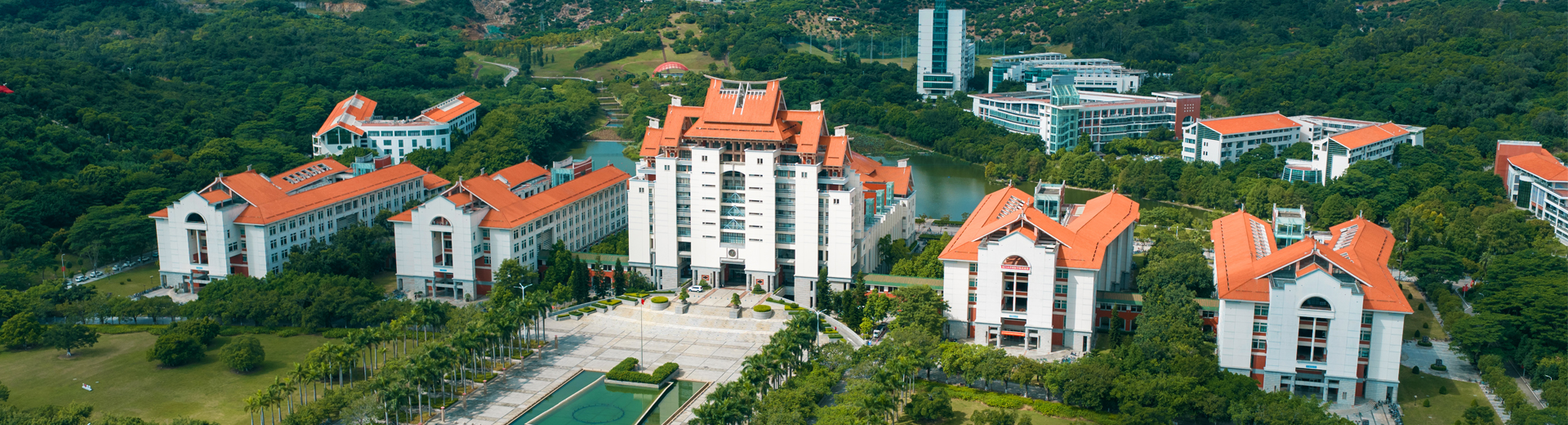
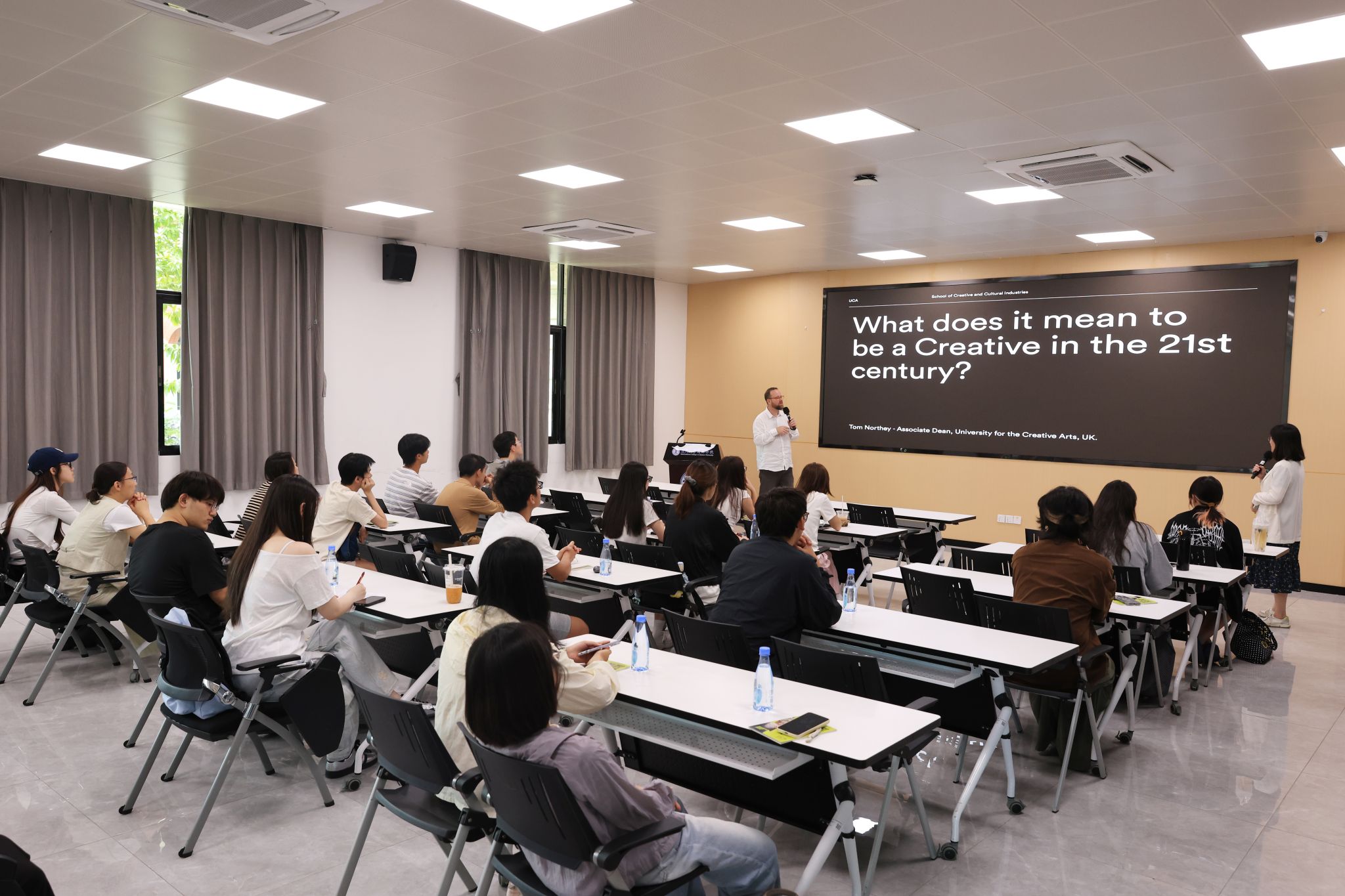
Lecture Series | What does it mean to be a Creative in the 21st century?
October 27, 2026
On October 23, the "Bridging East and West, Building Dreams Ahead" lecture series hosted by International College(IC), Xiamen University(XMU) was successfully held in Room 101, IC. The lecture featured Professor Tom Northey, Deputy Dean of the Farnham Campus at the University for the Creative Arts (UCA), UK, as the guest speaker. He engaged in an exchange with faculty and students on the theme " What does it mean to be a Creative in the 21st century?" The lecture attracted students from other colleges at the Zhangzhou Campus to participate enthusiastically and the atmosphere on site was lively.
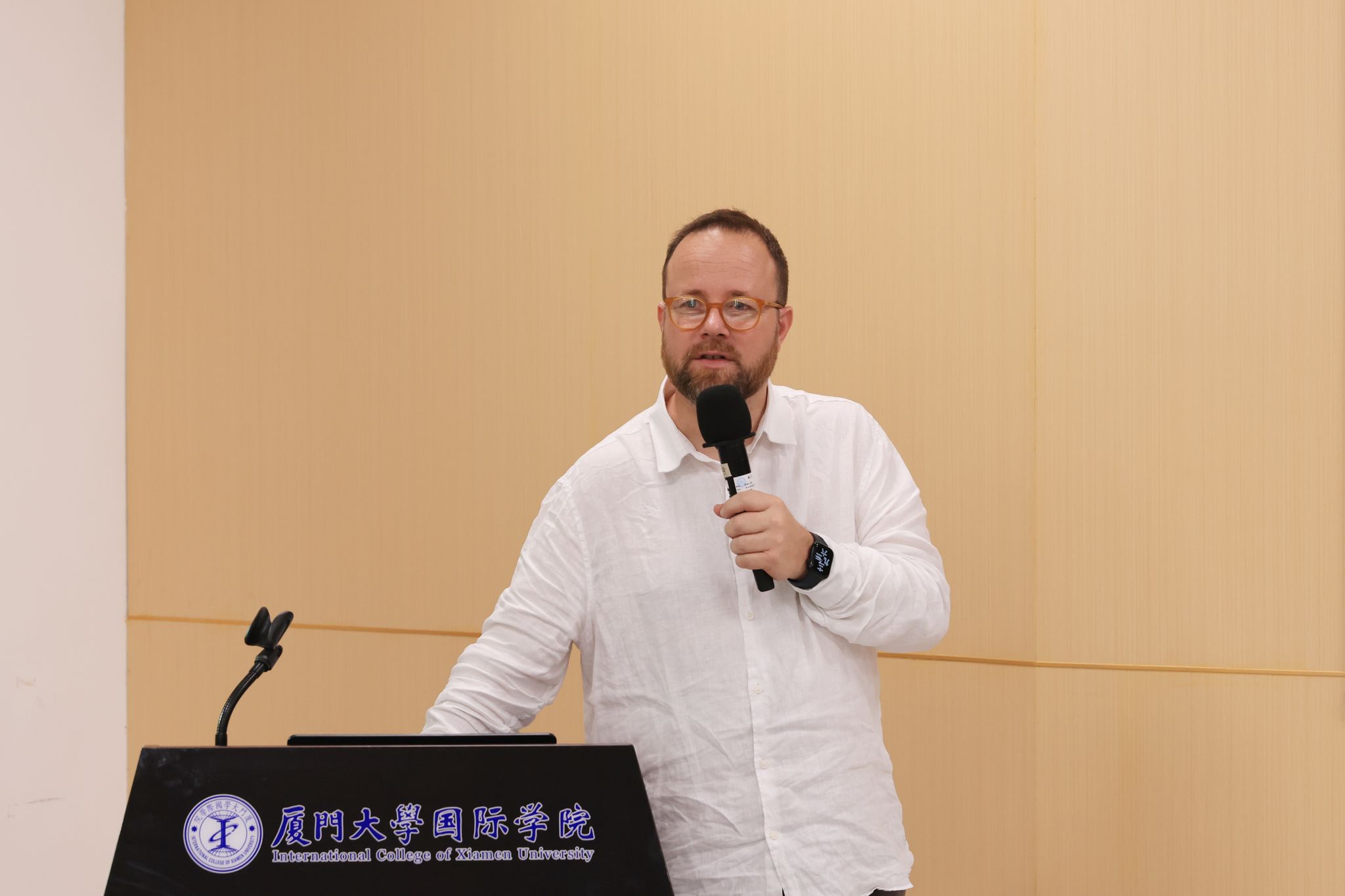
Professor Tom Northey has 26 years of experience in teaching and management in higher education, having served in roles including Dean of Faculty, Programme Director, Course Leader, Senior Lecturer, and Lecturer. At the same time, he is an experienced graphic designer and brand consultant who has provided design and branding consultancy services to internationally renowned brands such as the BBC, British Airways, Coca-Cola, The Guardian, Nike, Red Bull, and Tate Britain.
At the beginning, Professor Northey started from the products and services the audience encountered in their daily commutes and meals, and combined cross-media examples such as games, films, animation, interactive interfaces, and product packaging to vividly explain the essence of creative outcomes—memorable works are the result of creative consciously arranging experiences for their audiences. He emphasized that cultivating this ability relies on the long-term accumulation of time, practice, collaboration, and judgment. Notably, well-known brand cases such as Luckin Coffee and Peppa Pig were created by outstanding alumni of the University for the Creative Arts.
When discussing the impact of artificial intelligence on the creative industry, Professor Northey clearly distinguished between the concepts of "imitation" and "replication." He pointed out that AI has demonstrated significant efficiency advantages in rapidly generating images and producing audio and video, but its essence remains an imitation of the surface forms of human emotion. Lacking genuine lived experience, it cannot replicate the personal feelings that give works deeper meaning. As AI-generated content becomes increasingly widespread, "authenticity" itself has become a market advantage. Against this backdrop, the value of humanistic qualities such as creatives' taste, judgment, and real-life experience is being rediscovered. At the end of the lecture, Professor Northey offered three valuable pieces of advice to the students present: pay attention to the design around you, cherish the moments that fill you with awe, and choose the harder path.
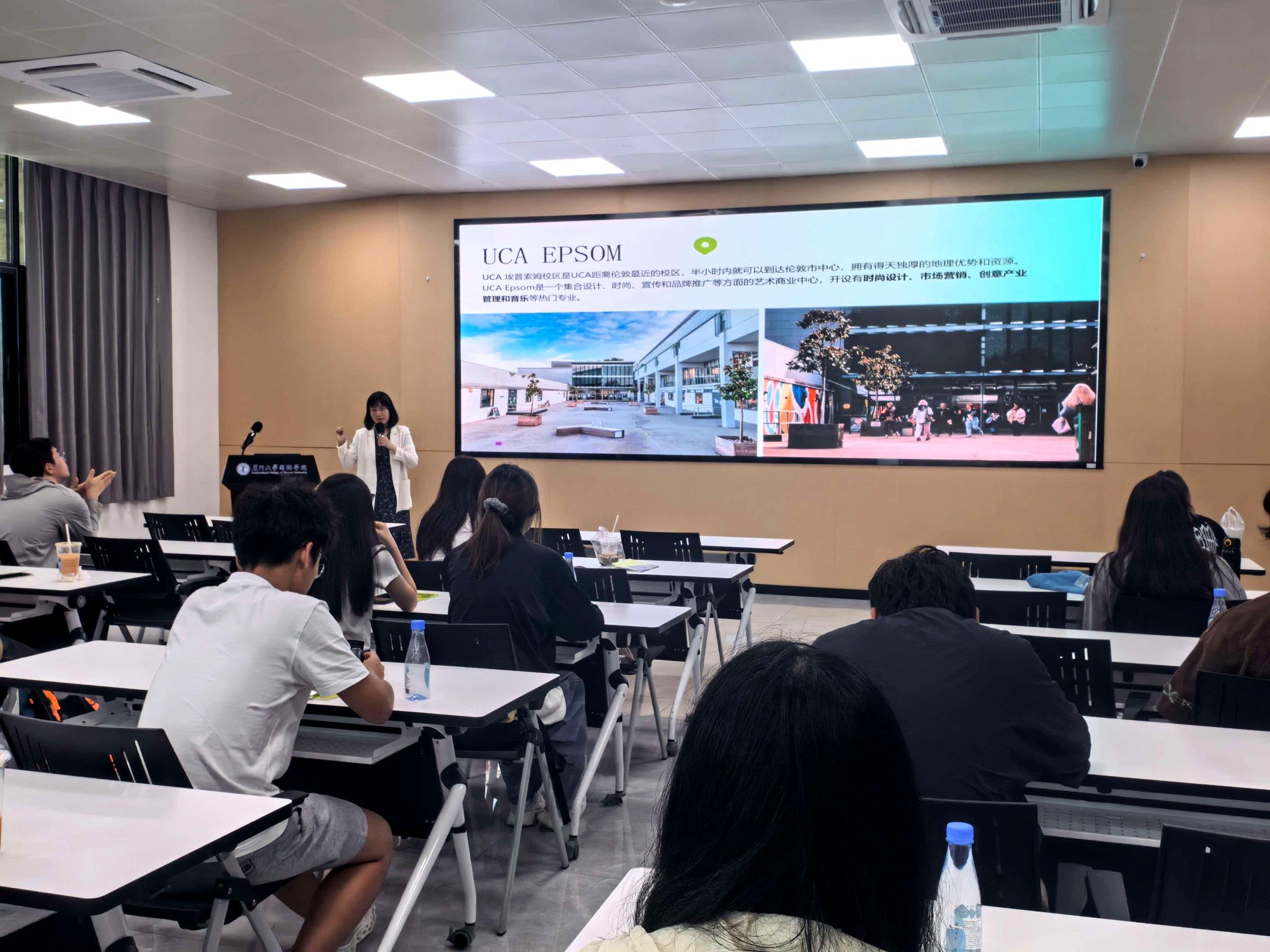
Following the keynote lecture, UCA admissions representatives Tony Li and Julia Guo gave a detailed introduction to the university. As a partner institution of our college's 3+1 programme, UCA is one of the public "full-spectrum arts universities" in the UK and the second-largest art and design institution in Europe, distinguished by its emphasis on community spirit, collaborative ethos, and creativity development. UCA currently ranks among the global top 100 art universities in the QS rankings and 73rd in the UK university rankings, and has received a Gold award in the UK government's Teaching Excellence Framework (TEF). In the subsequent Q&A session, the two teachers addressed students' questions one by one regarding the application process, programme offerings, and scholarship policies, with active interaction on site.
This lecture provided a direct channel for dialogue between IC's faculty and students and the University for the Creative Arts, and also offered informational reference for students interested in applying to UCA's arts-related and relevant business programmes. In the future, our college will continue to strengthen exchanges and cooperation with top overseas art institutions such as UCA, building a high-quality platform for students' overseas study progression.